
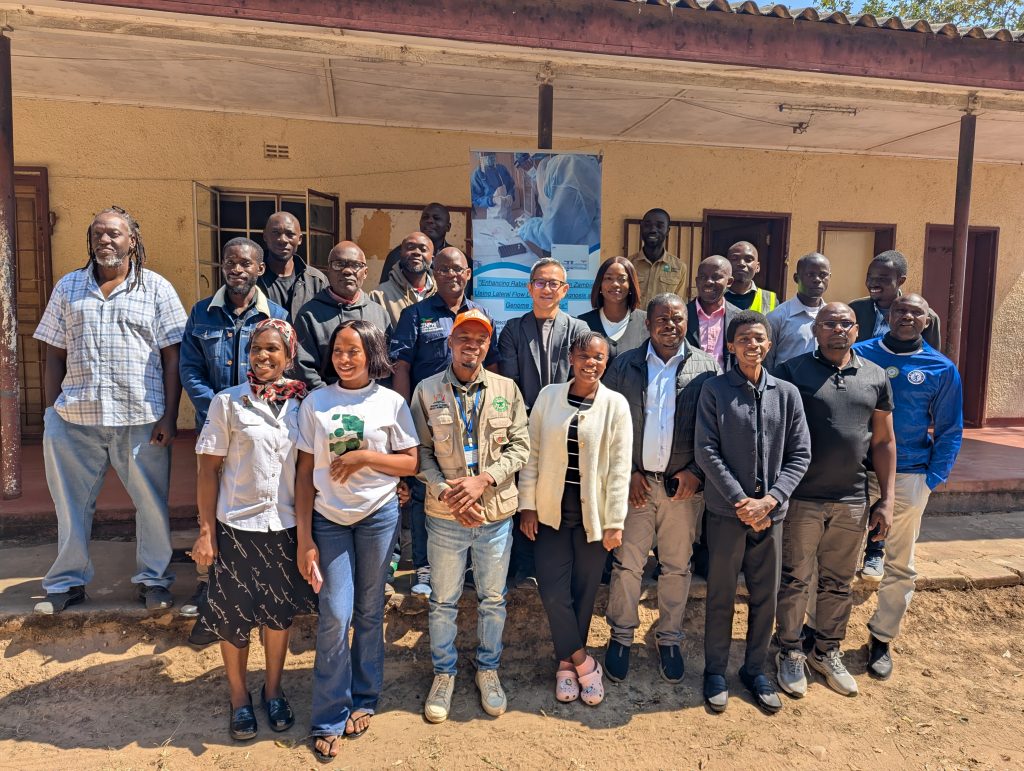
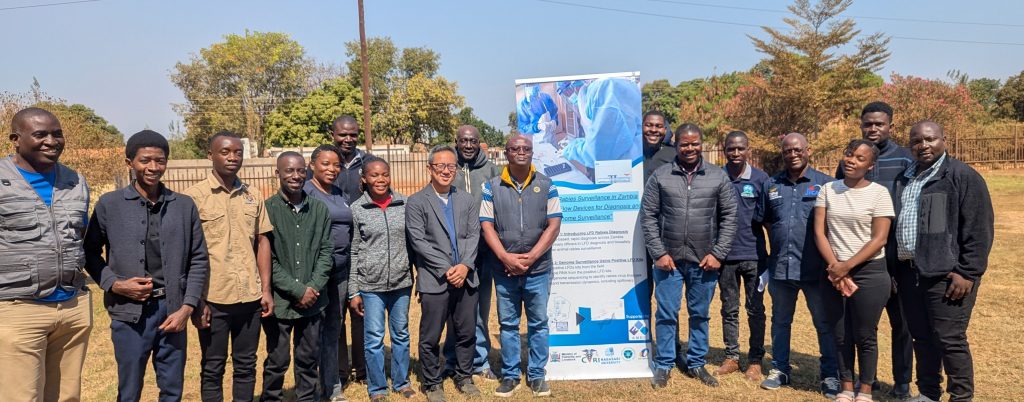
The Institute of Tropical Medicine, Nagasaki University, in collaboration with the University of Zambia School of Veterinary Medicine, the Central Veterinary Research Institute (CVRI), the Ministry of Fisheries and Livestock (MFL), Hokkaido University, and Oita University, conducted a series of training workshops on the use of rabies lateral flow devices (LFDs) in three provinces of Zambia between June and July 2026.
During this mission, the team traveled approximately 2,600 km by road in just one week, visiting three provinces, including remote areas located more than 800 km (approximately 12 hours by car) from the capital city, Lusaka. These provinces were selected in response to strong requests from local veterinary authorities, as rabies remains a major challenge in these areas.
Until now, many of these remote districts have lacked access to diagnostic laboratories capable of confirming rabies, making timely diagnosis and surveillance difficult. The training therefore focused on equipping District Veterinary Assistants with the skills necessary to perform LFD-based rabies diagnosis at the district level, thereby strengthening decentralized surveillance.
The Luapula and Northwestern Provinces are also adjacent to national parks and wildlife habitats, where interactions among wildlife, domestic dogs, and livestock are common. Although spillover transmission of rabies virus between wildlife and domestic animals is suspected, its epidemiology remains poorly understood.
As part of this project, LFD-positive devices will be collected from across Zambia, and viral RNA will be extracted directly from the used LFDs for genome sequencing. This nationwide genomic surveillance will provide valuable insights into rabies virus transmission routes, geographical spread, and potential spillover events between wildlife and domestic animals.
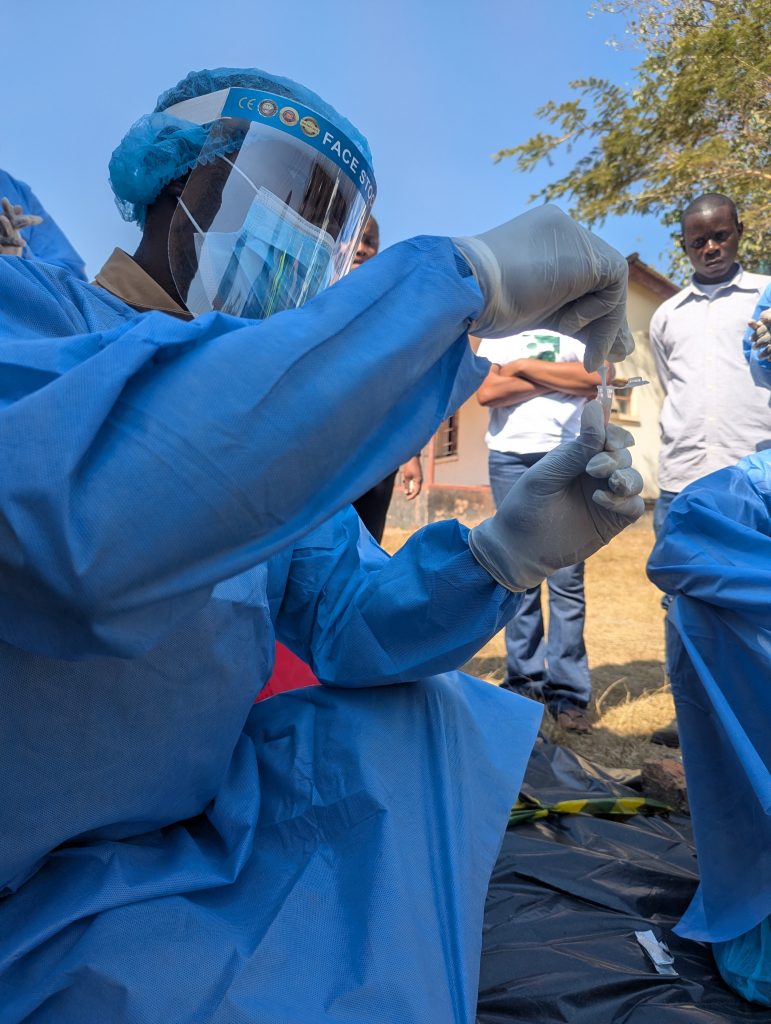
Luapula Province (29 June)
A total of 15 veterinary officers and veterinary assistants from 10 districts participated in the training.
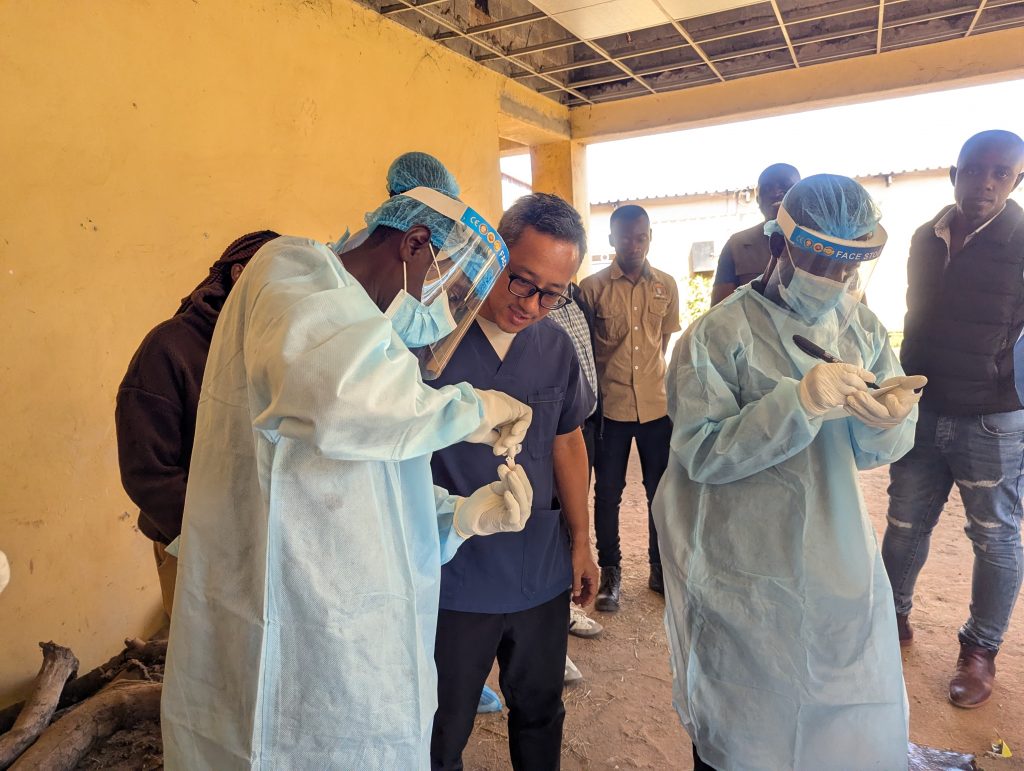
The workshop included lectures and hands-on practical sessions covering safe brain sample collection, rabies diagnosis using LFDs, biosafety procedures, reporting of diagnostic results, and proper storage and transportation of positive LFDs.
Following the training, 100 LFD kits were distributed to support rabies surveillance activities throughout the province.
Copperbelt Province (1 July)
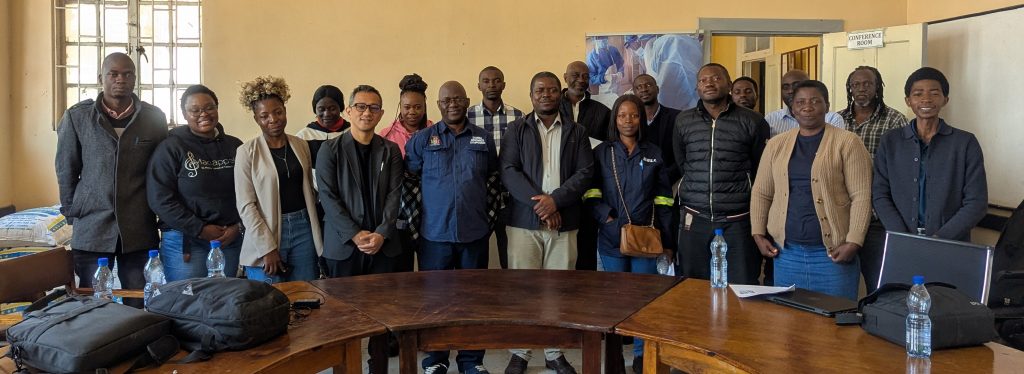
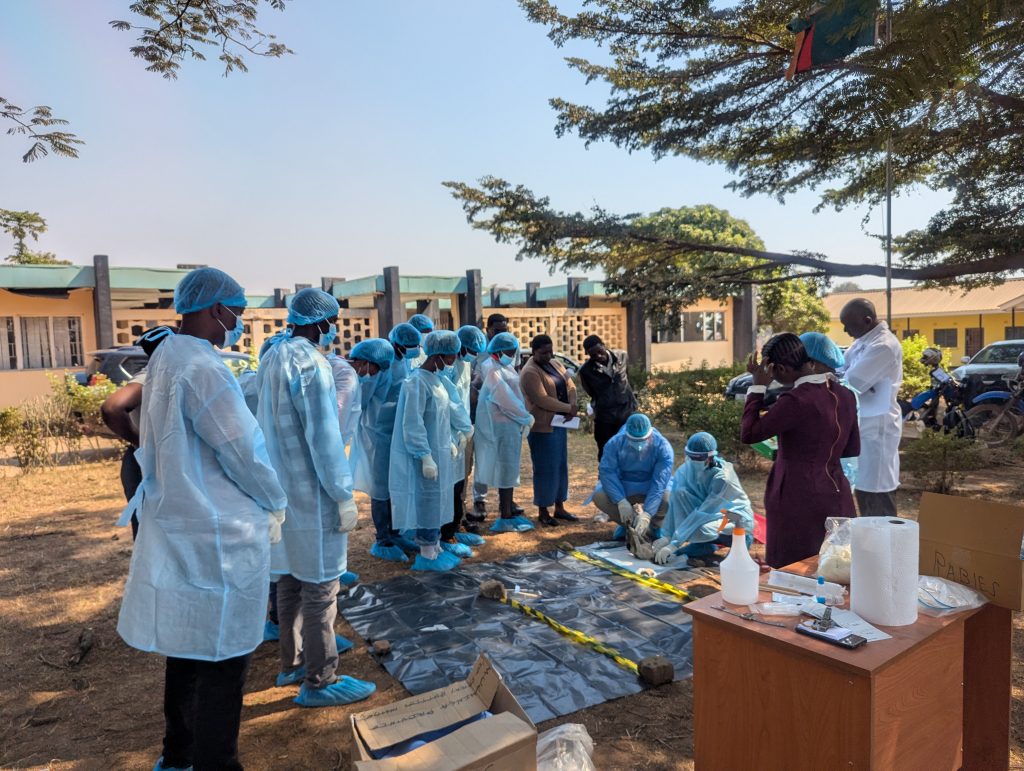
The training in Copperbelt Province was attended by 15 participants representing 10 districts.
Participants received practical instruction on the complete diagnostic workflow, from sample collection to result interpretation and reporting, enabling district-level implementation of rapid rabies diagnosis.
At the conclusion of the workshop, 80 LFD kits were supplied to the province.
Northwestern Province (3 July)
In Northwestern Province, 12 participants from 3 districts attended the training.
This province covers a vast geographical area where transporting specimens to central laboratories is often difficult. The workshop focused on establishing a decentralized surveillance system in which rabies can be diagnosed locally using LFDs and positive devices can subsequently be collected for genomic analysis.
Following the training, 70 LFD kits were distributed.
Future Perspectives
Across the three provinces, 42 veterinary personnel from 23 districts completed the training, and a total of 250 LFD kits were distributed.
Moving forward, LFD-positive devices generated through routine surveillance will be collected at the Central Veterinary Research Institute (CVRI) for genome sequencing. This initiative will enable researchers to characterize rabies virus transmission pathways across Zambia, identify geographical spread and potential wildlife–domestic animal spillover events, and generate scientific evidence to support more effective rabies surveillance and vaccination strategies.
Funding
This work was supported by the Japan Agency for Medical Research and Development (AMED) under the Japan Program for Infectious Diseases Research and Infrastructure (Overseas Research Bases Program, Basic Research), “Study of Rabies Virus Spillover and Transmission in Zambia” (Grant Number JP26wm0225043h0001; Principal Investigator: Nobuo Saito).
The activities were also conducted with the generous support of the Hokkaido University Zambia Base, whose invaluable logistical and local assistance is gratefully acknowledged.