On 16 December 2025, an end-term meeting of the JICA–Nagasaki University (NUITM) Grassroots Technical Cooperation Project was held at Twin Towers in Homa Bay County, Kenya.
The meeting was attended by 37 county and sub-county health officials, two representatives from the National Ministry of Health (MOH), two staff members from JICA Kenya, and six members from Nagasaki University. In addition, Prof. Kamiya and Ms. Suzuki, a former project expert, joined the meeting online.
The objectives of the meeting were to:
- Present the final outcomes of the five-year intervention project
- Share activities, results, and impacts from the start to the completion of the project
- Discuss sustainable measures among all stakeholders
- Identify the way forward after the completion of the JICA–NUITM Grassroots Project
The overall project results were presented by Ms. Shiho Hara and Ms. Sharon Anam. They reported on the package of activities implemented during the project period and highlighted that the number of tungiasis cases in the two targeted sub-counties had decreased by approximately 97%.
The presentation was structured as follows:
- Achievements at a glance
- Project framework and approach
- Output 1: Mapping and surveillance
- Output 2: Capacity strengthening
- Output 3: Community-level implementation
- Impact
- Institutionalization (county and national levels)
- Conclusions and recommendations
Following the project presentation, sub-county representatives shared their plans and experiences regarding sustainability after the project period.
From Ndhiwa Sub-county, Ms. Anne Kabaraka, the Ndhiwa Sub-county Focal Person, and from Suba-South Sub-county, Mr. Leonard Wauna, Sub-county Public Health Officer, delivered presentations covering the following topics:
- The current situation of tungiasis
- Key interventions implemented during the project period
- Involvement of county and national governments
Key resolutions related to sustainability included:
- Institutionalizing tungiasis interventions within public health services
- Strengthening intersectoral collaboration in tungiasis-prone areas
- Adapting national tungiasis policies at the county level
- Continuing regular mapping and treatment activities within communities
- Utilizing school health club members as advocates for tungiasis prevention and control, alongside continuous community health education
The roles of county and national governments were further clarified.
Roles of the County Government
- Integrating tungiasis treatment chemicals and supplies into the public health supply system
- Continuing capacity building for health personnel
- Institutionalizing tungiasis management policies
- Promoting a multi-sectoral approach
Roles of the National Government
- Providing and reviewing national guidelines for tungiasis management
Throughout the meeting, stakeholders expressed their appreciation to the donor and all partners for the significant achievements realized over the five-year project period.
Prof. Kamiya expressed his sincere gratitude to the County Department of Health, JICA Kenya, JICA Kyushu, Nagasaki University, and all stakeholders for their collaboration and support in successfully completing the project. JICA–NUITM also emphasized the importance of sustainability and highlighted the potential for further integration with WASH initiatives and housing improvement programs.
Prof. Inoue emphasized that scientific approaches and continuous capacity building are essential for effective disease control and elimination, and that practical and evidence-based public health policies should be established. He also highlighted that active involvement of community members is key to ensuring sustainability.
Representatives from the National Ministry of Health underscored the importance of infectious disease prevention and risk communication, as well as the need for continuous consultation with the national government. They also shared that a review of relevant policies, including the tungiasis guidelines, is planned. The meeting concluded with the message that the elimination of neglected tropical diseases (NTDs) is possible, and that greater focus should be directed toward addressing more challenging diseases in the future.
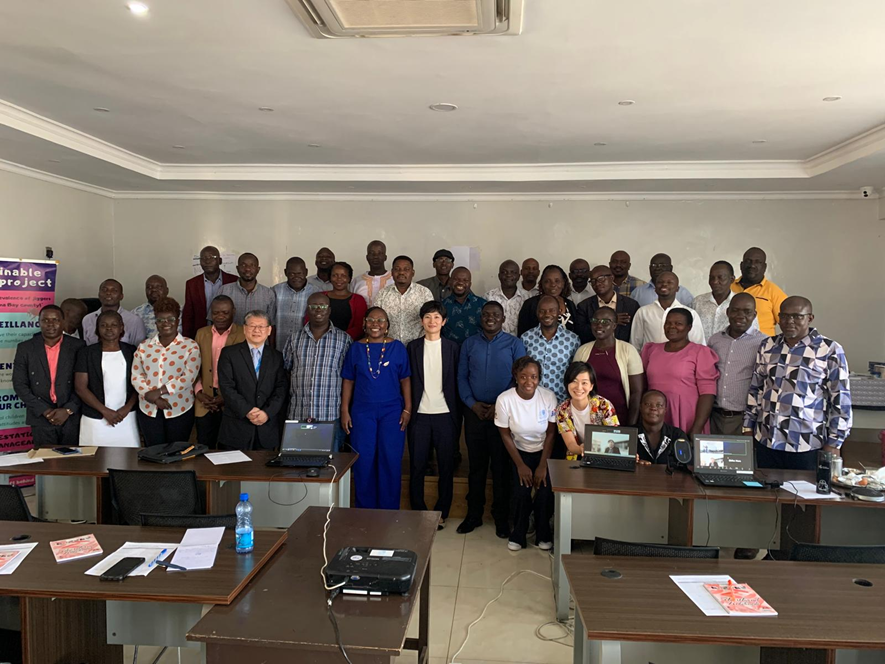
Participants from the Ministry of Health, Ministry of Education, Ministry of Interior and Coordination, JICA Kenya, and Nagasaki University at the end-term project meeting.
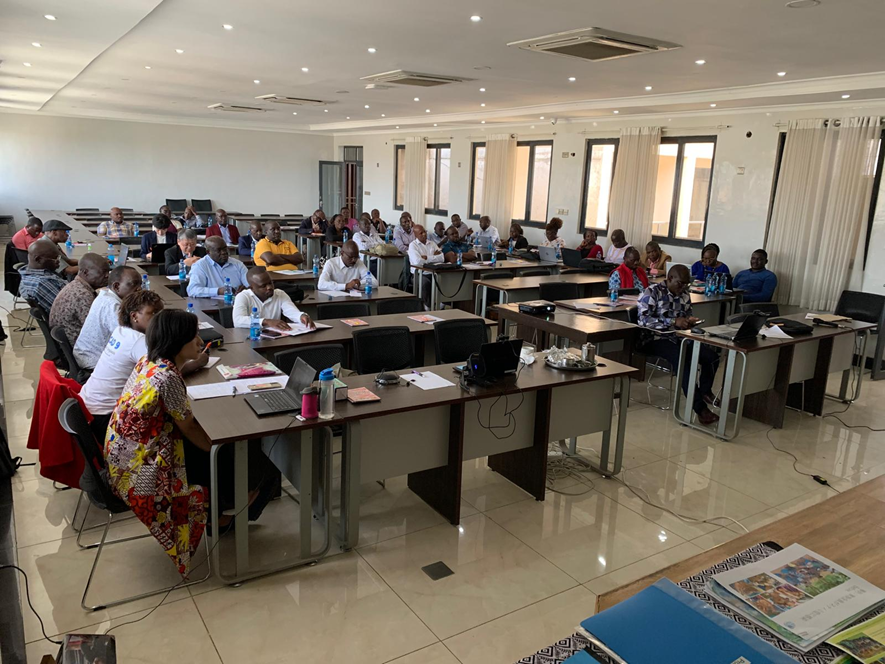
Participants attentively listening to Prof. Kamiya, who joined the meeting online, as he addressed the importance of sustainability following the completion of the project.
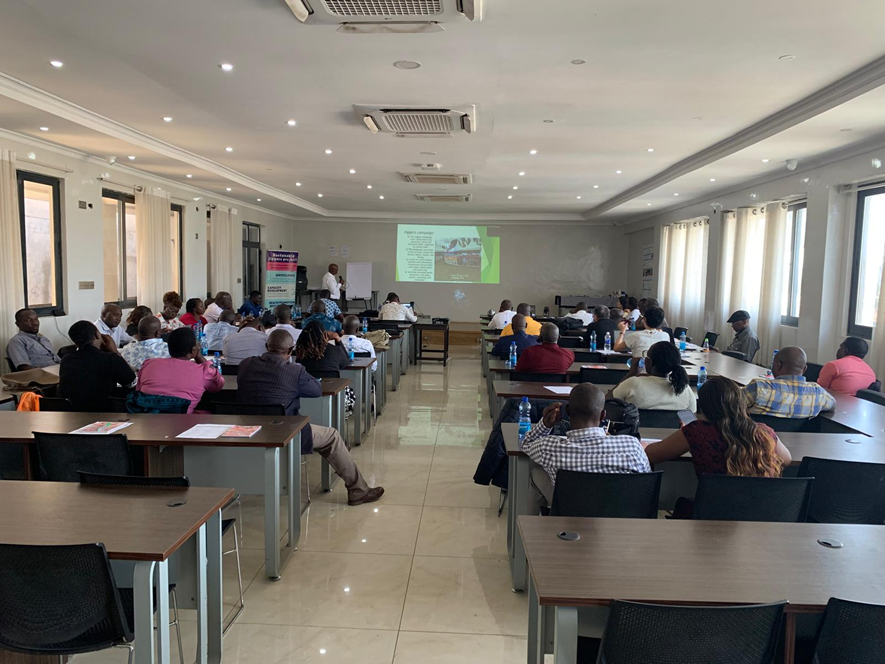
Sub-county representatives presenting sustainability strategies at the grassroots level.