[Japanese Here] Last Update: 2026.10.13 detailed information

About the Project
Why zoonotic malaria demands a One Health response

MISSION OF THE PROJECT
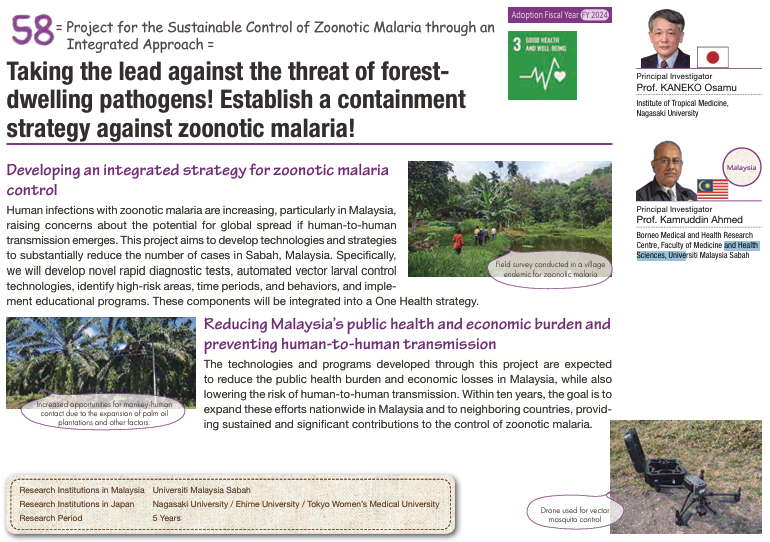
Developing an integrated strategy for zoonotic malaria control

Human infections with zoonotic malaria are increasing, particularly in Malaysia, raising concerns about the potential for global spread if human-to-human transmission emerges. This project aims to develop technologies and strategies to substantially reduce the number of cases in Sabah, Malaysia. Specifically, we will develop novel rapid diagnostic tests, automated vector larval control technologies, identify high-risk areas, time periods, and behaviors, and implement education programs. These components will be integrated into a One Health strategy.

EXPECTED IMPACT
Reducing Malaysia's public health and economic burden and preventing human-to-human transmission

The technologies and programs developed through this project are expected to reduce the public health burden and economic losses in Malaysia, while also lowering the risk of human-to-human transmission. Within ten years, the goal is to expand these efforts nationwide in Malaysia and to neighboring countries, providing sustained and significant contributions to the control of zoonotic malaria.

Project Duration
September 2025 - September 2030


Research
Five outputs defined in the Project Design Matrix (PDM)

OUTPUT 1
Risk assessment

A methodology for assessing the risk of human infection with zoonotic malaria parasites is developed by monitoring the prevalence of zoonotic malaria (including, but not limited to, Plasmodium knowlesi (Pk) malaria) in monkeys, mosquitoes and humans, and by molecular biological analyses of malaria parasite species infecting all three hosts.

OUTPUT 2
Diagnostics

Novel diagnostic methods for Pk malaria are developed.

OUTPUT 3
Vector control

A novel methodology of controlling malaria vector mosquitoes (larvae) using drones is developed.

OUTPUT 4
Risk education

A zoonotic malaria risk education programme is developed that will be effective in reducing the number of infections and severe cases.

OUTPUT 5
One Health system

A One Health implementation system is strengthened through collaboration between organisations in the human, animal and environmental sectors (research institutions, government agencies, educational institutions, private companies, communities, etc.).


Research Institutions
Implementing institutions in Malaysia and Japan

In Malaysia
Universiti Malaysia Sabah

Borneo Medical & Health Research Centre (BMHRC), Faculty of Medicine & Health Sciences, Universiti Malaysia Sabah (UMS)

In Japan
Institute of Tropical Medicine (NEKKEN), Nagasaki University
Proteo-Science Center (PROS), Ehime University
Center for Marine Environmental Studies (CMES), Ehime University


Project Site
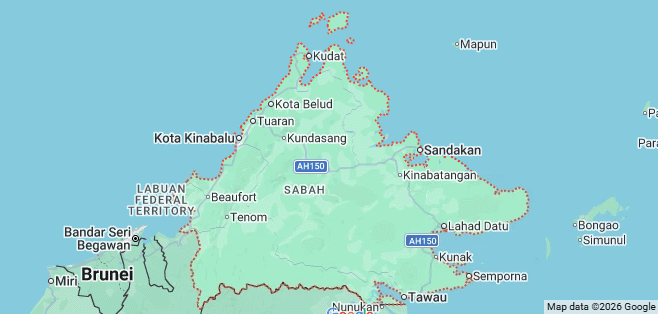
Sabah, Malaysia


Partners and supporting agency

Partners
Ministry of Health Malaysia (MoH)
Sabah State Health Department (SSHD), MoH
Sabah Wildlife Department (SWD), Ministry of Tourism, Culture and Environment

Supporting Agency
Japan International Cooperation Agency (JICA)
Japan Agency for Medical Research and Development (AMED)
Ministry of Higher Education Malaysia (MoHE)